Since the AI boom of 2023, tools like ChatGPT became highly praised co-pilots for students and young adults. However, I saw a quiet and often overlooked shift: early adopters like young adults are especially vulnerable to these changes - as automation replaces critical thinking.
As team lead on this graduate project, I directed the design direction of an educational framework aimed at helping students and early-career professionals make informed decisions about AI use in creative workflows and everyday tasks.
Skills
Qualitative UX research
Product design
Game narrative writing
Usability Testing
My Role
Team lead (workshop facilitator)
Researcher
Designer
Writer
Timeline
3 months, Q1 2025
Industry
Education
Gaming
Final Design at a Glance
Fun Fact
An interactive, scenario-based web game aimed to educate young folks on AI impact and consequences in daily life.
Context
Why this project?
It hits a little closer to home…
Young adults are growing up with AI - but not equipped with the mindset to question it .
Having been both a student and a young professional, I’ve experienced firsthand how easily early adopters like us can become overly reliant on AI (most often without realizing it). That idea sparked this project as a passionate effort to raise awareness on the risks from AI reliance.
Problem
Initial Scope
Research
Desk research data shows
Higher AI use links to lower critical thinking in users (r = –0.68).
~ 85% of US students (18+) use AI weekly.
Only 15% of Gen Z workforce are "super" AI users.
What do researchers working at the frontier of AI think about this?
We interviewed 4 industry and academia experts in AI development to inform our design direction.
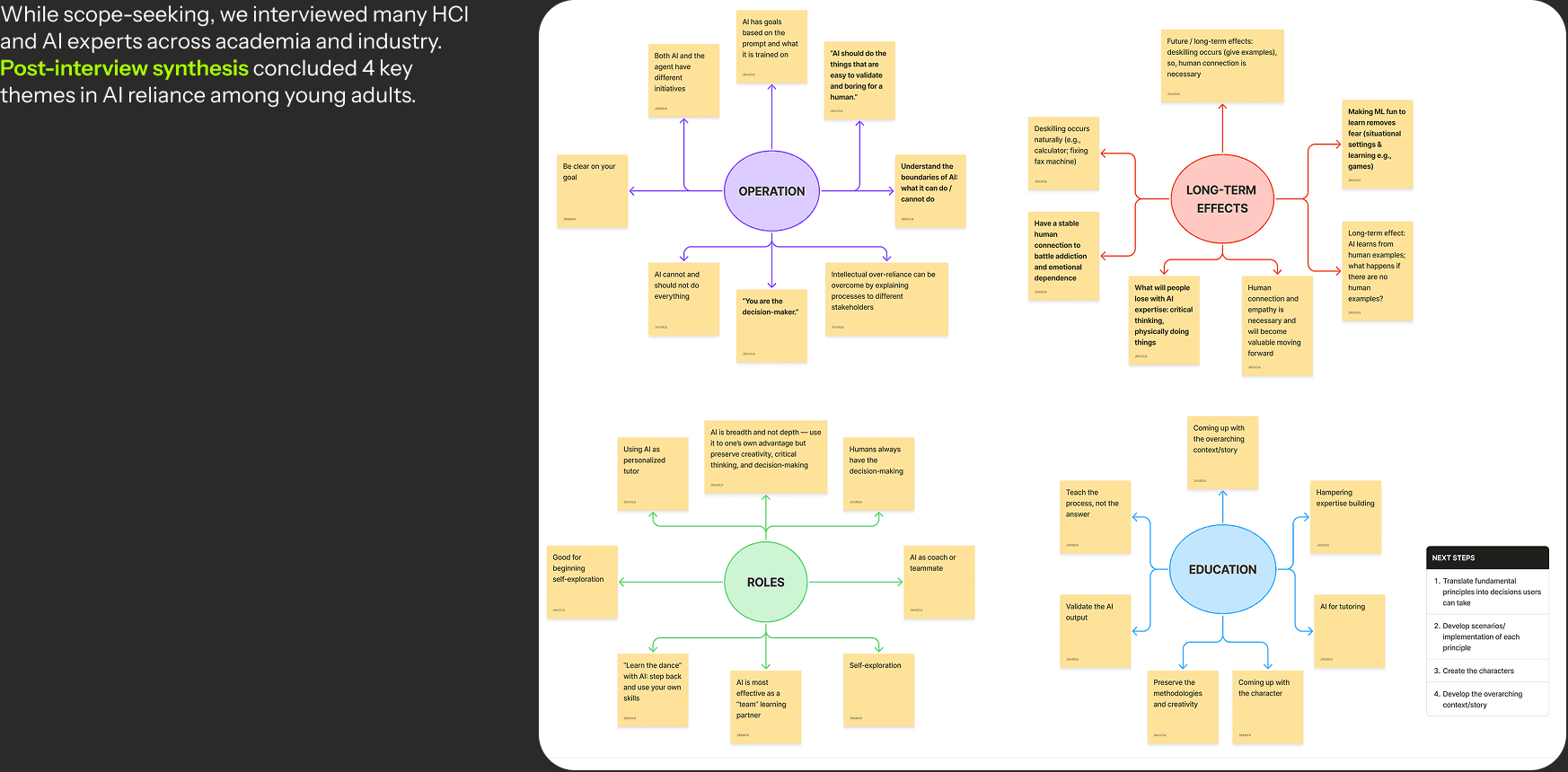
These conversations helped us explore future risks of AI and how the next generation may be impacted - grounding us in both technical insight and human-centered foresight.
Key findings
Humans should always stay in control.
Hence, our design will emphasize on shared decision-making and contribution.
AI overuse leads to deskilling; this highlights the importance of maintaining human connection and long-term awareness.
In education, AI is most effective as a learning peer, instead of a formal teacher.
True learning happens through reflection and iteration (process), not instant answers (outputs).
Refined Scope
Process
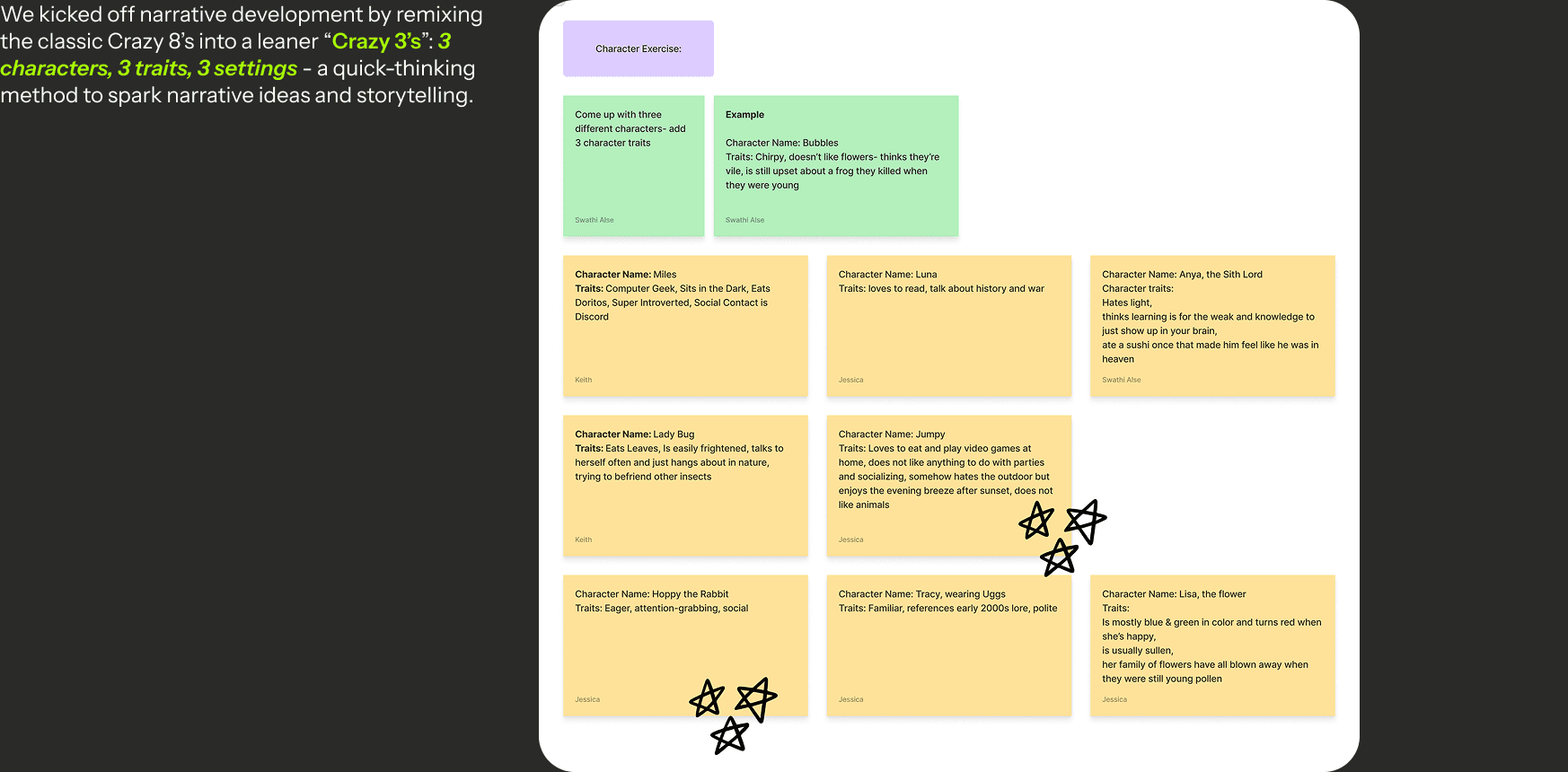
Final Design
An interactive, scenario-based web game aimed to educate young folks on AI impact and consequences in daily life.
Hi-Fidelity Prototyping
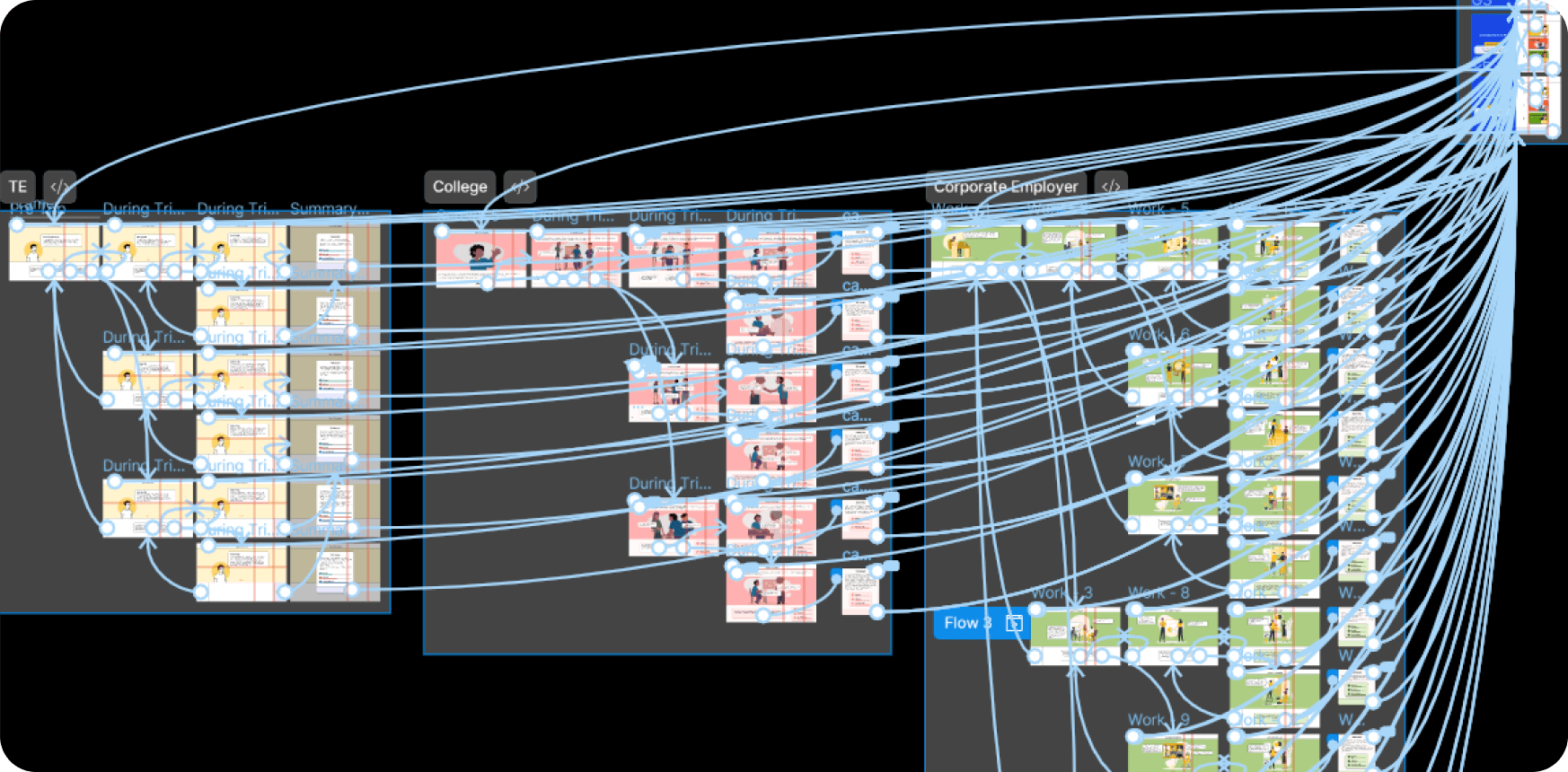
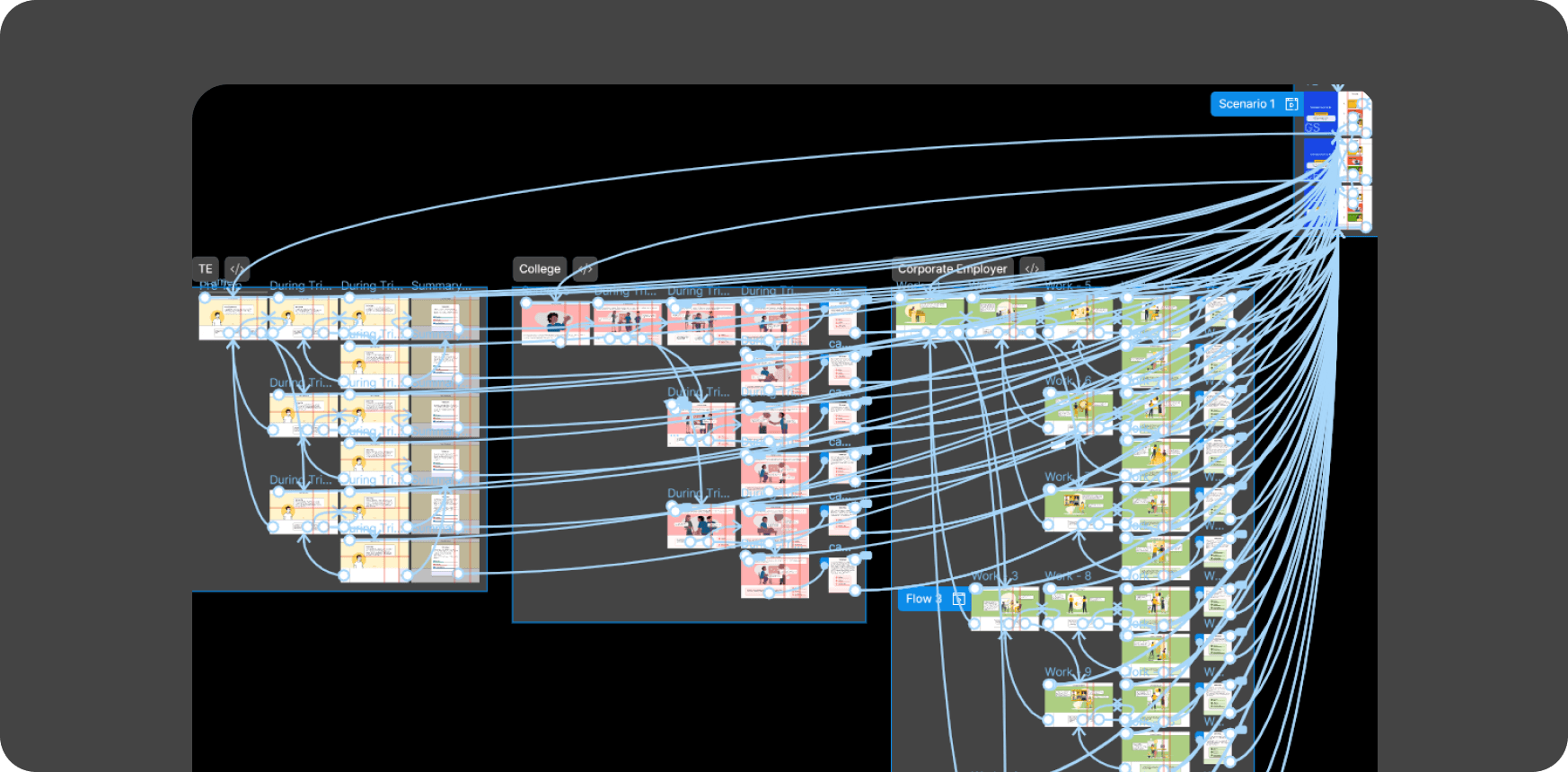
3 storylines, x webs of prototyping
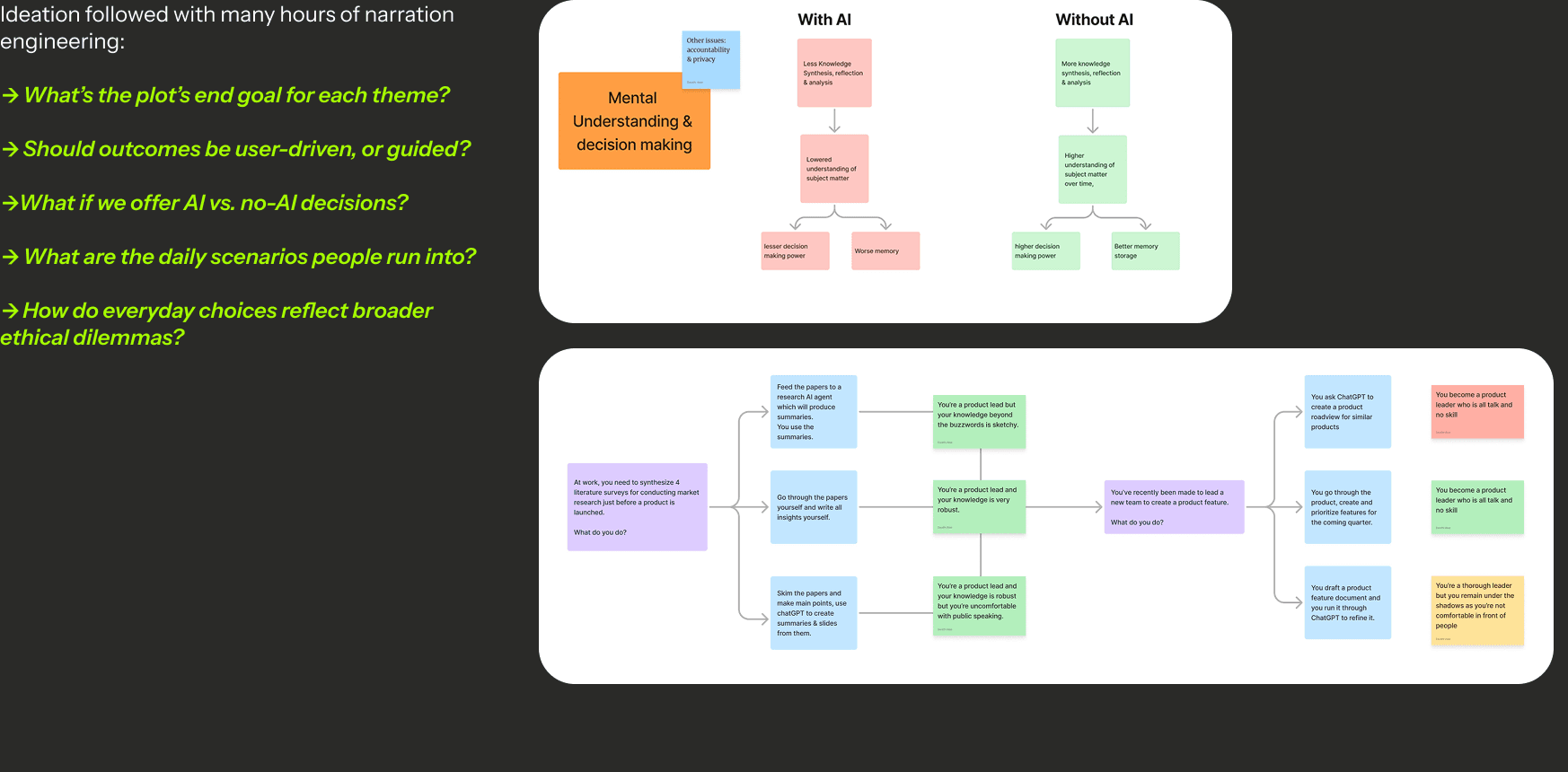
Each plot choice unlocks a different ending, with unlimited tries to rewind and explore how decision-making with AI alters the story's trajectory.
As the user reaches the ending, a pre-calculated profile metric is displayed, revealing their levels of confidence, fulfillment, and learning aptitude based on their decisions throughout the journey.
Usability Testing
4 tests conducted within 2 days
Interestingly, 2 of these insights contradict each other. Both highlight an opportunity for future testing to explore these tensions further, if time and resources permit.
Testing data shows
Scores alone are not indicative enough of educational value.
Score at each plot point is valuable as immediate feedback.
Utilize more practical examples in daily life.
Next Project