
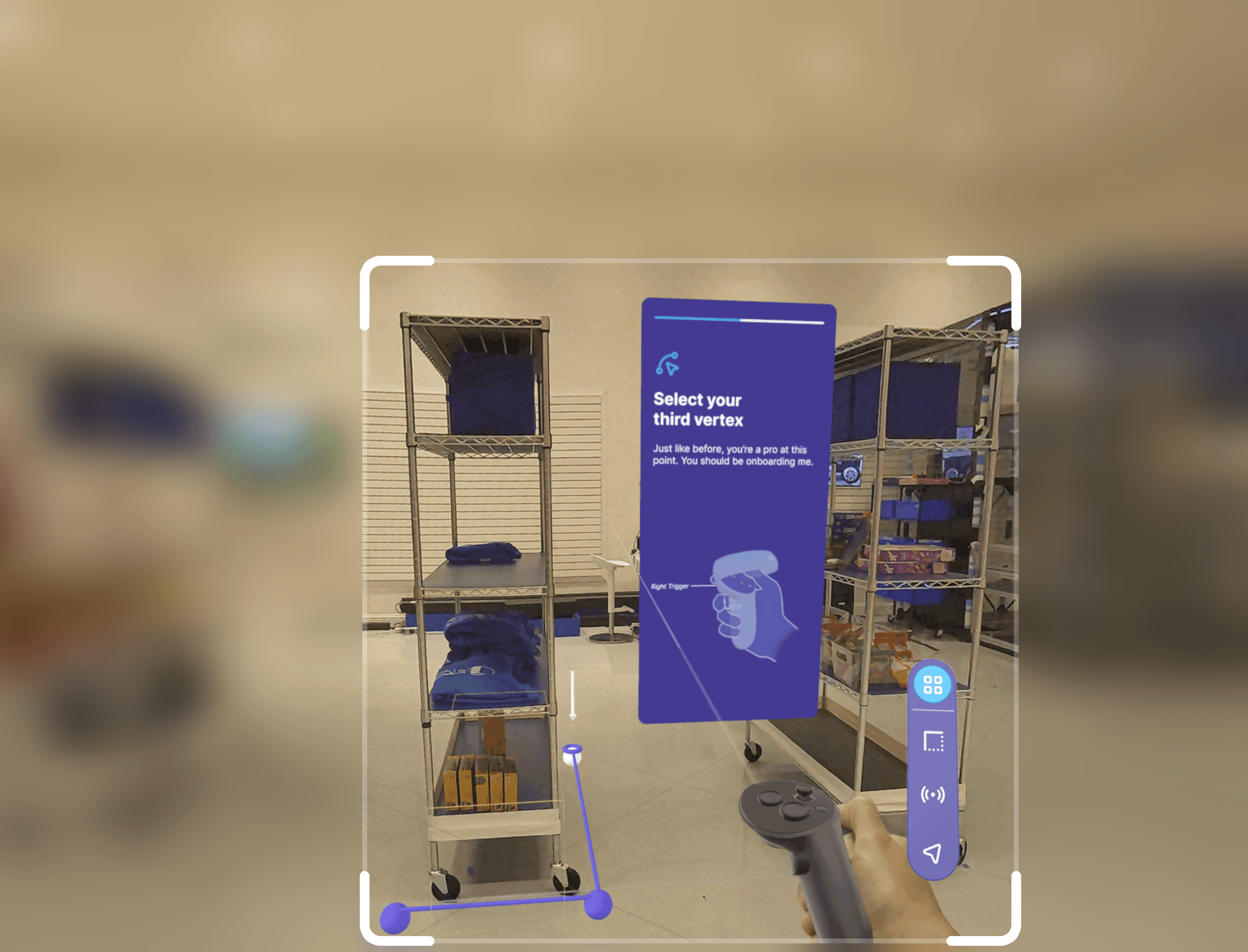
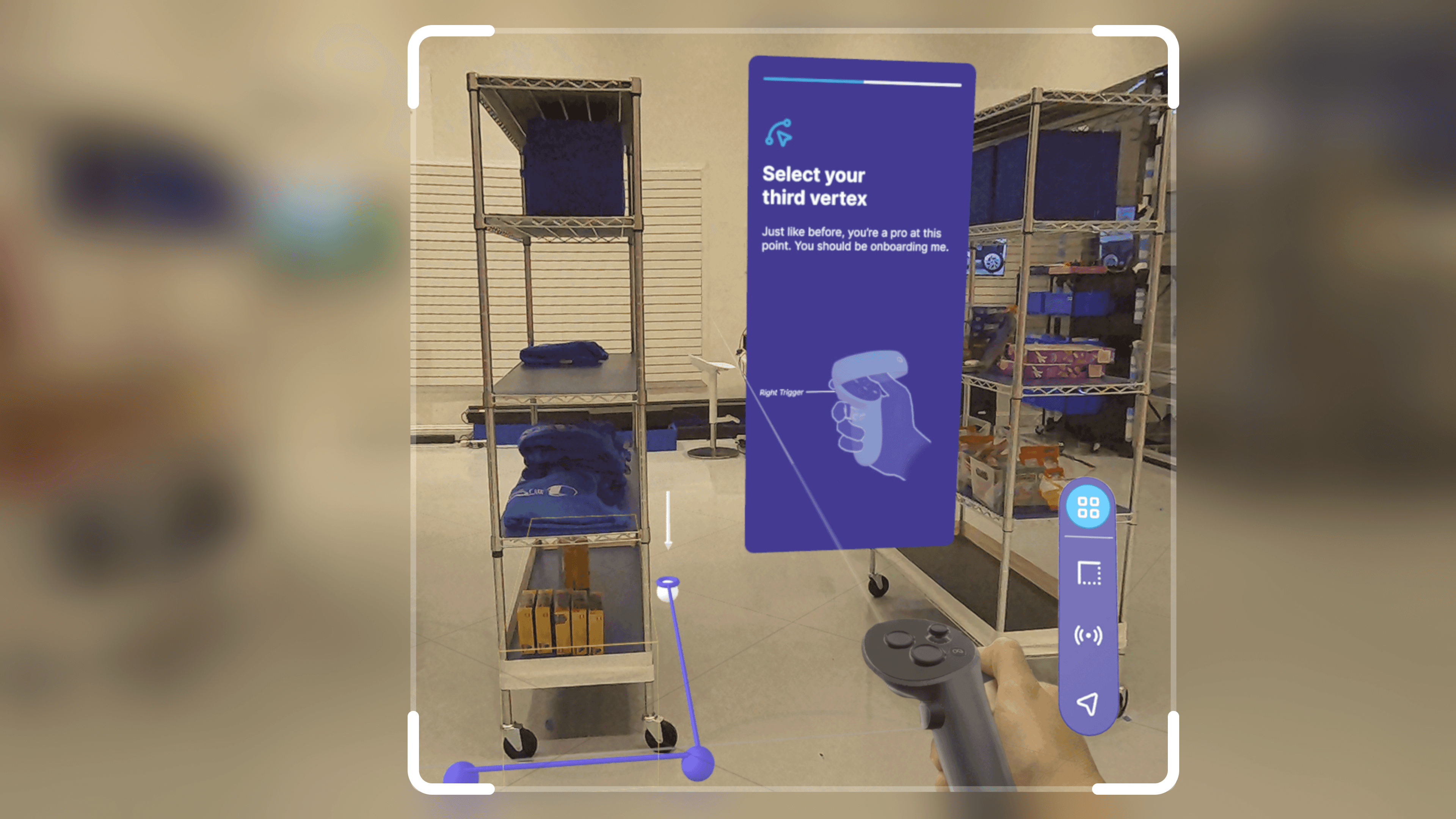
As autonomous robots become core to industrial operations, managing them through 2D dashboards no longer reflects how they operate in the real world. InOrbit’s Space Intelligence platform sits at the intersection of physical space, real-time data, and human decision-making.
As a UX/XR design intern out of 3, I explored how mixed-reality interaction models could revolutionize robotic operations, prototyping immersive workflows that bring spatial context and clarity back into the user experience.
Skills
Product design
Mixed reality (XR) design
UX heuristics evaluation
UX research
My Role
Researcher
Designer
Developer coordinator
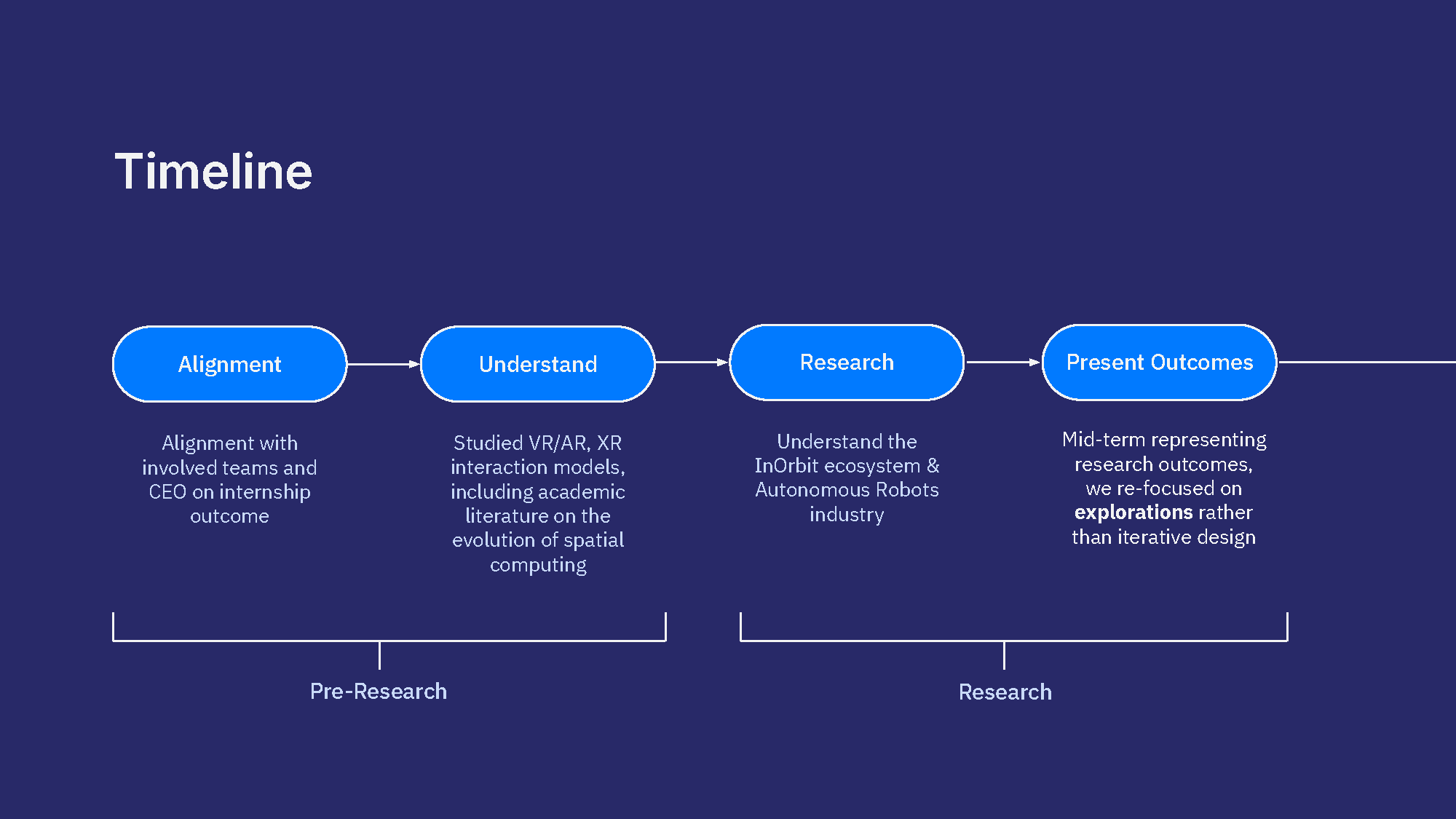
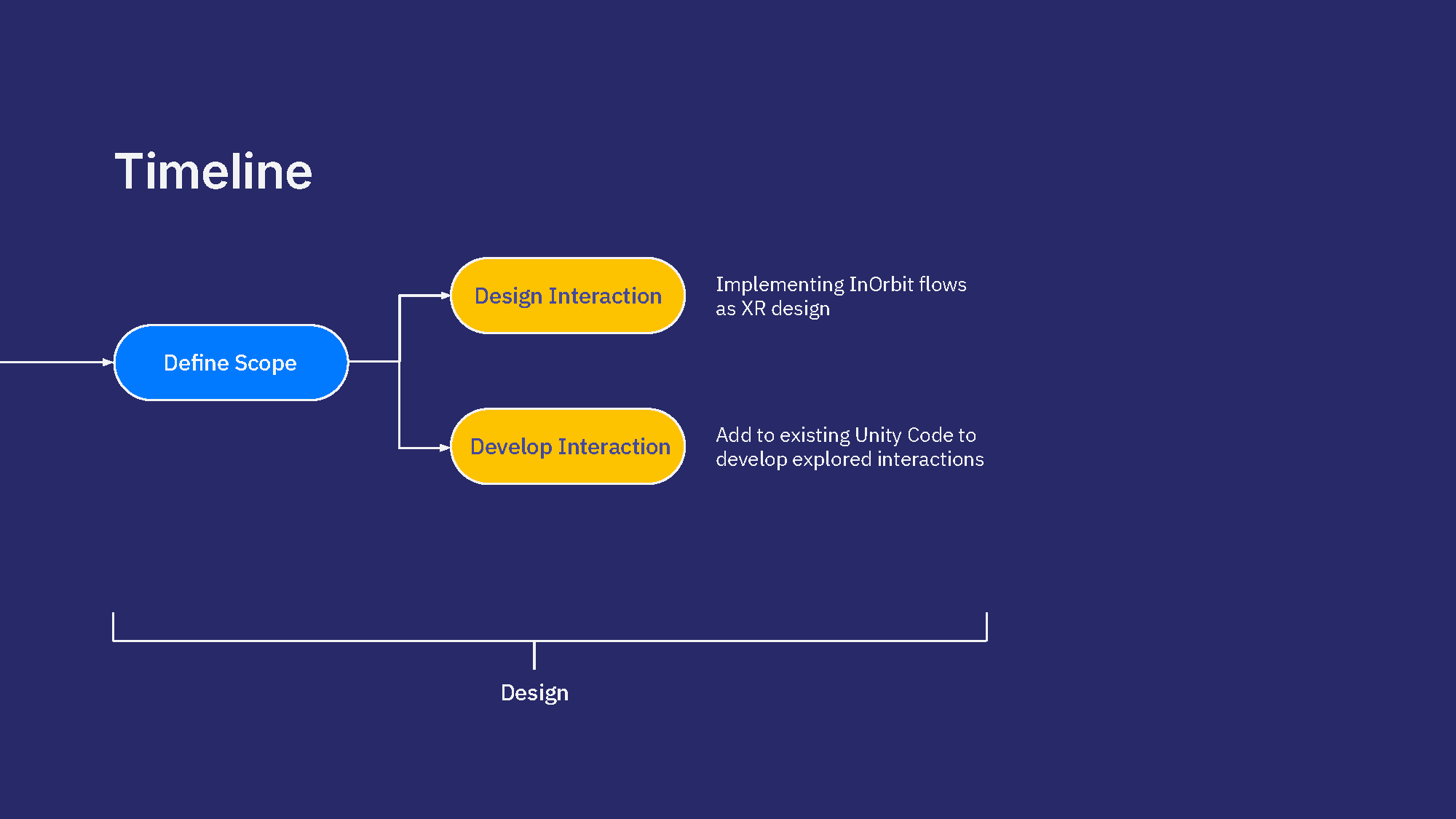
Timeline
2.5 months, Q3 2025
Tools
Figma
Meta Quest 3
ShapesXR
Unity
InOrbit RobOps platform (internal)
Industry
Autonomous Robotic Systems
Mixed Reality (XR) Interfaces
Final Design
XR task workflows that support day-to-day robotic operations, ultimately enabling end users to complete complex actions through intuitive and spatial interactions.
*Due to NDA restrictions, limited design is shown. Please reach out for a full case study.
Task workflow 1
Task workflow 2
A little bit about InOrbit…
The central nervous system for industrial operations.
The startup is an AI-powered robot operations (RobOps) platform that manages, orchestrates, and optimizes the fleets of autonomous robots in warehouses and manufacturing facilities.
Where my work comes in
Translating RobOps complexity into intuitive XR interaction models.
Bridging technical feasibility and business goals with UX expertise.
Scope
Process
Final Design
XR task workflows that support day-to-day robotic operations, ultimately enabling end users to complete complex actions through intuitive and spatial interactions.
Task workflow 1
Task workflow 2
*Due to NDA restrictions, limited design is shown. Please reach out for a full case study.
